Bonevia Bonevia

2026 Top Maxillofacial Plating Systems Manufacturers

Time:2026-10-13 Author:Charlotte
0%

The 2026 market for Maxillofacial Plating Systems reflects a demanding balance between precision, strength, and biological respect. Surgeons need plates that fit irregular facial contours, hold reduction securely, and remain manageable through small surgical approaches. Manufacturers must also demonstrate consistent production, traceable materials, and dependable clinical support.

Dr. Rainer Schmelzeisen, a respected maxillofacial surgeon and educator, has emphasized a practical principle: “Stable fixation should serve function, not replace surgical judgment.” That statement remains highly relevant. A thin orbital plate may look elegant on a catalog page, yet its handling, screw engagement, and contour accuracy matter in the operating room. Small differences can affect occlusion, symmetry, comfort, and revision risk.

This overview examines leading Maxillofacial Plating Systems manufacturers through clinical usability, engineering quality, product breadth, and documented reliability. It considers titanium and resorbable options, plating profiles, screw technology, instrumentation, and educational services. It also recognizes regional availability and regulatory requirements.

“Top” is not absolute.

A company trusted for mandibular reconstruction may not lead in pediatric craniofacial surgery. Product performance can vary with anatomy, technique, and surgical experience. That is an important limitation. The strongest comparison therefore combines manufacturer evidence with real clinical context. Readers should review current certifications, peer-reviewed studies, surgeon feedback, and hospital procurement standards before making decisions. This approach supports informed evaluation rather than promotional ranking. It also keeps patient safety, functional restoration, and long-term care at the center of the discussion.
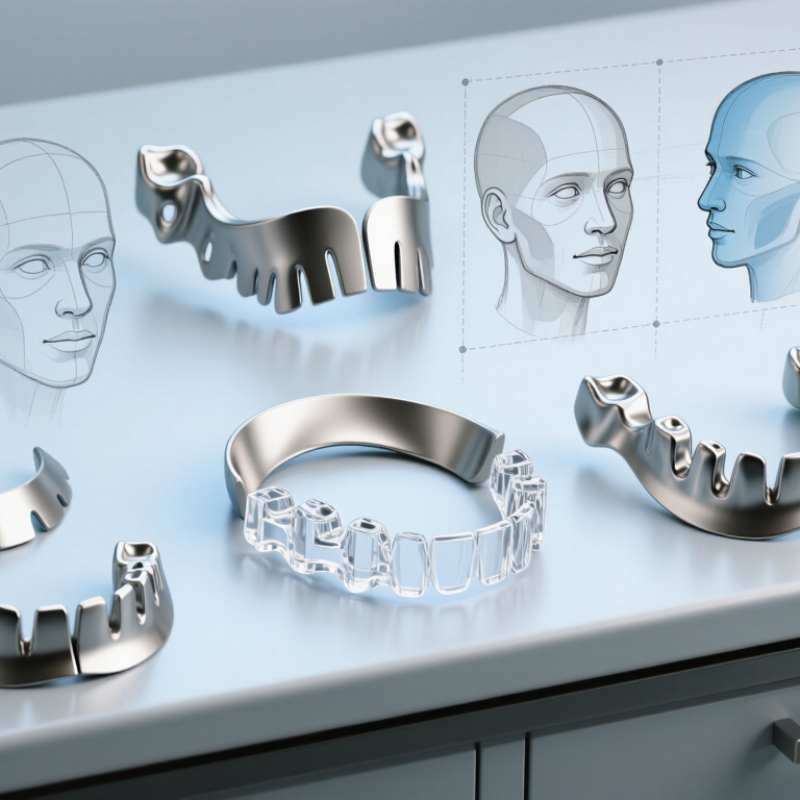
2026 Top Maxillofacial Plating Systems Manufacturers

2026 Maxillofacial Plating Market: Scope, Segments, and Manufacturer Landscape

The 2026 maxillofacial plating market covers systems used to stabilize facial fractures, reconstruct bone, and support corrective surgery. Demand is shaped by trauma care, oncology reconstruction, dental surgery, and congenital deformity treatment. It is still changing. Surgeons increasingly expect low-profile plates, adaptable screw options, and instruments that reduce operating time. Patient anatomy remains highly variable, so one design rarely fits every case.

Market segments usually include plates, screws, surgical meshes, fixation kits, and procedure-specific instruments. Materials may include titanium, resorbable polymers, and other biocompatible options. Each segment requires careful testing, traceability, and dependable sterilization guidance. In daily practice, handling matters as much as specifications. A plate that bends predictably can be more useful than one with impressive laboratory data.

The manufacturer landscape includes large medical-device producers, specialized craniofacial suppliers, and regional contract manufacturers. Their differences often appear in engineering support, quality systems, delivery capacity, and surgeon training. Hospitals may compare fatigue performance, imaging compatibility, inventory depth, and documentation before purchasing. Regulatory requirements also vary across markets, making compliance expertise essential. Forecasts can miss sudden trauma trends or reimbursement changes. That weakness deserves attention. Reliable manufacturers should publish clear technical evidence, maintain consistent production controls, and respond transparently when product feedback reveals a design limitation.

Titanium ASTM F67 and F136: Core Materials Used by Leading Manufacturers

2026 Top Maxillofacial Plating Systems Manufacturers

Titanium ASTM F67 and F136 remain core materials in advanced maxillofacial plating systems. ASTM F67 generally covers commercially pure titanium, valued for corrosion resistance and biocompatibility. ASTM F136 covers Ti-6Al-4V ELI, an alloy with higher strength and strong fatigue performance. These differences matter when plates must remain stable across thin bone, curved facial contours, or repeated functional loading.

Experienced manufacturers should provide complete material certificates, heat-lot traceability, dimensional inspection, and validated surface finishing. Surgeons and procurement teams should also examine screw compatibility, plate profile, bending behavior, and imaging considerations. A polished surface may reduce tissue irritation, but finishing quality must be verified, not assumed. Material selection alone does not guarantee clinical performance.

Tips: Check whether the certificate names ASTM F67 or ASTM F136 clearly. Review the oxygen, carbon, nitrogen, and iron limits when applicable. Ask how the supplier controls machining debris and surface contamination. Small details matter.

A reliable evaluation also considers sterilization compatibility, packaging integrity, and manufacturing consistency. F136 may suit applications needing greater mechanical strength, while F67 can offer useful ductility and formability. However, the best choice depends on anatomy, fixation design, and surgical technique. No material is perfect. Even a well-documented system deserves critical review when clinical demands, manufacturing tolerances, or handling conditions change.

ISO 13485:2016, FDA 510(k), and CE MDR Manufacturer Requirements

For 2026, maxillofacial plating system manufacturers must treat compliance as a design input, not a final paperwork step. ISO 13485:2016 requires controlled processes, documented risk management, supplier oversight, and traceable production records. The ISO Survey 2023 reported more than 26,000 valid ISO 13485 certificates worldwide, showing how common certification has become. Certification alone does not prove clinical suitability.

In the United States, manufacturers must determine whether a 510(k) submission is required. FDA guidance defines substantial equivalence through intended use, technological characteristics, and performance evidence. FDA’s 2023 CDRH annual reporting shows thousands of device submissions progressing through established review pathways. For plating systems, practical evidence may include fatigue testing, corrosion evaluation, dimensional verification, sterilization validation, and biocompatibility testing. Small gaps matter.

Under CE MDR, manufacturers need clinical evaluation, post-market surveillance, vigilance procedures, UDI controls, and an effective quality management system. The European Commission’s 2024 MDR implementation reporting highlighted continuing pressure on conformity assessment capacity and notified-body availability. That can affect launch planning. A technical file may look complete yet lack meaningful clinical justification. This remains a common weakness. Experienced teams should challenge testing assumptions, record design changes clearly, and verify that claims match actual surgical use. Compliance is never perfectly static. Device safety deserves continual review.

5–2.4 mm Plate Systems: Design Features and Clinical Applications

5–2.4 mm Plate Systems: Design Features and Clinical Applications

In 2026, maxillofacial plating systems are increasingly judged by fit, handling, and predictable fixation. The 5–2.4 mm range supports different mechanical demands across facial anatomy. Thicker plates can provide stronger load resistance in mandibular reconstruction. Smaller plates may suit midface, orbital, and delicate contouring procedures. Low-profile edges help reduce palpable hardware and soft-tissue irritation. Rounded borders can also improve patient comfort.

Useful systems offer both locking and non-locking screw options. Locking interfaces can maintain stability when bone quality is limited. Standard holes allow controlled compression when fracture reduction requires it. Multiple contouring zones help surgeons match the plate to curved anatomy. Precise instrumentation matters too. A plate is only as reliable as its placement.

Clinical selection depends on fracture pattern, bone thickness, occlusion, and soft-tissue coverage. In practice, surgeons often prefer systems that bend without deforming the screw interface. That preference is reasonable, but excessive reshaping can weaken performance. Careful preoperative imaging and an established fixation plan remain essential. Fit matters. No plate is universally ideal. Surgeons should verify dimensions, material compatibility, and approved indications before use. Long-term outcomes also deserve attention, because early stability does not always predict healing, comfort, or later revision needs.

2026 Manufacturer Evaluation Using Quality, Capacity, Evidence, and Reach

2026 Top Maxillofacial Plating Systems Manufacturers

A credible 2026 evaluation should measure quality, capacity, evidence, and reach together. Market reports from Grand View Research and Fortune Business Insights forecast steady mid-single-digit growth for cranio-maxillofacial devices through this decade. That growth raises scrutiny, not just demand. A reliable manufacturer should show ISO 13485 certification, validated sterilization, biocompatibility testing, and batch-level traceability. Surgeons also need consistent screw torque, plate contour accuracy, and predictable instrument fit.

Capacity requires more than a large factory photograph. Review documented production volumes, cleanroom controls, supplier redundancy, and average lead times. Quality teams should compare nonconformance records, corrective actions, and complaint trends. Public regulatory databases, including FDA 510(k) records and field-safety notices, can support this review. They do not replace clinical judgment. A spreadsheet can still lie by omission.

Evidence should include peer-reviewed clinical studies, post-market surveillance, and clearly defined follow-up periods. The strongest data separates trauma, reconstruction, and pediatric cases. Reach means more than distributor counts. Check local registration, surgeon training, technical support, and replacement-part availability. The World Health Organization’s medical device guidance repeatedly emphasizes lifecycle oversight and context-appropriate maintenance. That principle matters in smaller hospitals. No scorecard is perfect. Some manufacturers disclose excellent technical data but limited real-world outcomes, while others provide broad clinical experience with uneven reporting. The most defensible ranking therefore rewards transparent evidence, stable supply, and measurable service performance.

FAQS

What does the maxillofacial plating market cover?

It covers plates, screws, meshes, fixation kits, and surgical instruments. These systems stabilize fractures and support bone reconstruction. They also assist corrective, dental, oncology, and congenital procedures.

Why do surgeons prefer low-profile plating systems?

Low-profile edges may reduce palpable hardware and soft-tissue irritation. Rounded borders can improve comfort around delicate facial contours. Patient anatomy varies widely, so one design cannot fit every case.

Which materials are commonly used in these systems?

Common options include titanium, resorbable polymers, and other biocompatible materials. Each material requires careful testing and sterilization guidance. Material choice should match the procedure and approved indications.

What features make a plating system practical during surgery?

Predictable bending helps surgeons follow curved facial anatomy. Locking and non-locking screw options support different fixation needs. Clear instruments can reduce handling problems and operating time.

How are plates selected for different facial procedures?

Selection depends on fracture pattern, bone thickness, occlusion, and soft-tissue coverage. Smaller plates may suit midface or orbital areas. Thicker plates can support mandibular reconstruction.

What testing should manufacturers complete before market entry?

Testing may include fatigue, corrosion, dimensions, sterilization, and biocompatibility. Manufacturers also need traceable production records and supplier controls. Small evidence gaps can create serious uncertainty.

Does certification prove that a system is clinically suitable?

No. Certification shows controlled processes, not universal clinical success. Clinical evidence, approved indications, and practical surgical performance still require review. That distinction is easy to overlook.

What should hospitals examine when comparing manufacturers?

Hospitals may assess engineering support, delivery capacity, training, imaging compatibility, and inventory depth. They should also review technical documentation and production consistency. Forecasts can fail when trauma patterns or reimbursement policies change.

What limitations should surgeons consider before using a plate?

Excessive reshaping may weaken performance or affect screw interfaces. Early stability does not always predict healing, comfort, or later revision needs. Fit matters, but no plate is universally ideal.

Conclusion

The 2026 Maxillofacial Plating Systems market is shaped by growing demand for reliable solutions in trauma reconstruction, orthognathic procedures, and craniofacial surgery. This overview examines market scope, key segments, and the manufacturer landscape, with particular attention to titanium materials conforming to ASTM F67 and ASTM F136. These materials are valued for their strength, corrosion resistance, biocompatibility, and suitability for long-term clinical use.

It also explains major manufacturer requirements, including ISO 13485:2016 quality systems, FDA 510(k) pathways, and CE MDR compliance expectations. Plate systems ranging from 1.5 to 2.4 mm are compared by design, fixation options, anatomical adaptability, and clinical application. Finally, manufacturers are evaluated through four practical criteria: product quality, production capacity, clinical and regulatory evidence, and international market reach. This framework helps healthcare organizations and industry professionals assess suppliers consistently while supporting informed decisions about safety, performance, and future market positioning.

Charlotte

Charlotte

Charlotte is a seasoned marketing professional with a deep understanding of the company's portfolio and a passion for elevating its presence in the market. With a keen eye for detail and a commitment to excellence, she ensures that our professional blog is regularly updated with insightful articles......