Bonevia Bonevia

How to Choose the Right Titanium Cannulated Screws?

Time:2026-09-08 Author:Liam
0%

Choosing the right Titanium Cannulated Screws is a clinical decision, not a catalog exercise. Screw diameter, thread design, length, pitch, and titanium grade must match the fracture pattern, bone quality, and surgical approach. A guidewire may improve placement, but it does not correct poor reduction. That distinction matters.

Industry data supports careful implant selection. Grand View Research reported that the global orthopedic implants market was valued at approximately USD 53.7 billion in 2023, with continued growth expected through 2030. Fortune Business Insights also identifies trauma fixation as a major orthopedic implant application, driven by aging populations, sports injuries, and minimally invasive techniques. These reports describe market direction, not a guarantee of clinical success. Product claims still require scrutiny.

Orthopaedic trauma specialist Dr. William M. Ricci has repeatedly emphasized a practical principle: “The implant should serve the reduction, not replace it.” That principle fits Titanium Cannulated Screws especially well. Their hollow shaft supports guidewire-controlled insertion, while titanium offers corrosion resistance and strong biocompatibility. Yet titanium is not automatically superior in every case. Its lower elastic modulus can reduce stress shielding, but its surface behavior and mechanical strength must suit the fixation demands.

Look closely.

A surgeon should compare imaging, fracture stability, screw purchase, and removal requirements before choosing a design. Manufacturer testing, ISO documentation, FDA or equivalent regulatory clearance, and published clinical evidence also deserve attention. The difficult part is often overlooked: the “best” screw may be the wrong length, placed through weak bone, or selected without considering compression. This guide examines those decisions with a practical, evidence-aware approach.
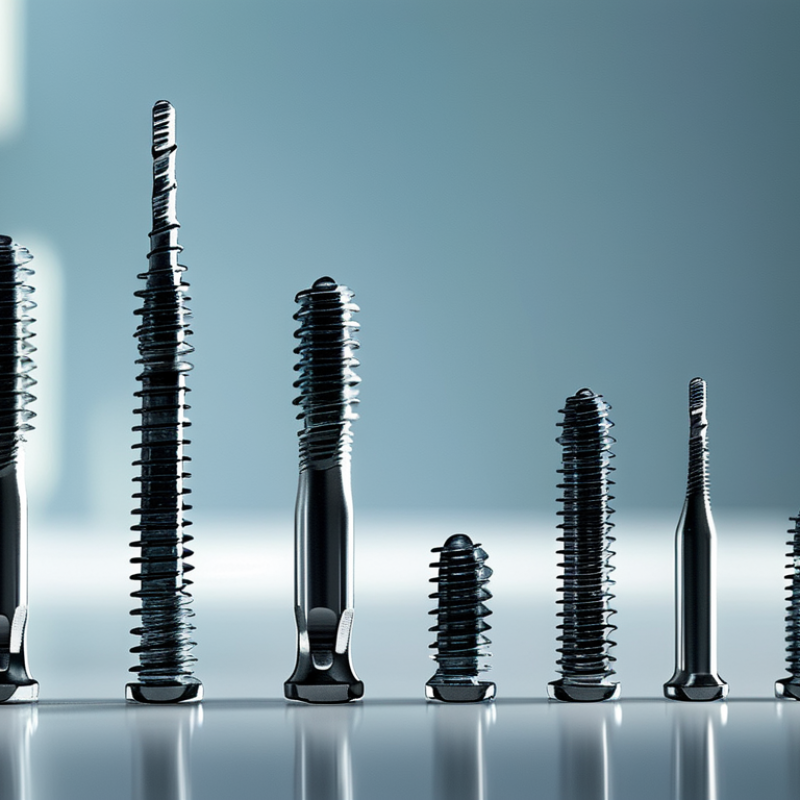
How to Choose the Right Titanium Cannulated Screws?

Define Titanium Cannulated Screws by ASTM F136 and ISO 5832-3 Standards

Choosing titanium cannulated screws starts with defining the material, not only the thread profile. ASTM F136 and ISO 5832-3 identify wrought titanium-6Al-4V ELI for surgical implants. The ELI designation means controlled levels of oxygen, nitrogen, carbon, and iron. These limits support suitable strength, ductility, and corrosion resistance in the implant environment.

Ask for a complete material certificate. Check the stated standard, edition, heat number, chemical composition, mechanical results, and traceability. A certificate alone is not enough. The manufacturer should also provide evidence of dimensional control, surface condition, and cannulation accuracy. A blocked or eccentric cannulation can interfere with guide-wire placement. Small details matter.

The screw diameter, length, pitch, head design, and cannula size should match the surgical technique and bone anatomy. Thread engagement must be considered alongside the expected load. Titanium is not automatically the best choice for every fracture pattern. That assumption deserves review. ASTM F136 and ISO 5832-3 describe material requirements, but they do not select the correct screw for a patient. Verify fatigue data, sterilization compatibility, packaging integrity, and applicable regulatory documentation. Comparing test methods across standards can also expose gaps. Similar wording does not always mean identical evidence. A careful technical review should connect the certified alloy to the actual finished screw.

How to Choose the Right Titanium Cannulated Screws?

Chemical composition limits for titanium alloy Ti-6Al-4V ELI specified by ASTM F136 and ISO 5832-3

The chart compares maximum permitted elemental percentages, while aluminum and vanadium are shown as specification ranges. ASTM F136 and ISO 5832-3 define the material chemistry for implant-grade Ti-6Al-4V ELI; final screw selection should also consider diameter, length, cannulation, mechanical performance, surface condition, sterilization, and supplier traceability.

Match Screw Diameters from 2.0 to 7.3 mm to Fracture Anatomy

How to Choose the Right Titanium Cannulated Screws?

Fracture anatomy should guide screw diameter, not habit. The Global Burden of Disease 2019 study reported about 178 million new fractures worldwide. That scale highlights a practical issue: fixation must fit the patient, not merely the catalogue.

2.0–2.4 mm A 2.0–2.4 mm screw may suit small articular fragments in the hand, wrist, or foot. These screws preserve bone stock around narrow fragments.

3.0–4.0 mm A 3.0–4.0 mm diameter often provides better purchase in medium-sized bones. Think metacarpals, malleoli, or selected radial fractures.

4.5–5.5 mm A 4.5–5.5 mm option may suit larger metaphyseal or diaphyseal fragments when the cortex permits safe passage.

6.5–7.3 mm For high-load regions, 6.5–7.3 mm screws can offer stronger compression, especially in the pelvis, proximal femur, or hindfoot.

However, larger is not automatically stronger. It may split a thin cortex or threaten nearby soft tissue.

A 2023 International Osteoporosis Foundation report identified fragility fractures as a major and growing healthcare burden. Poor bone quality complicates diameter selection. Measure the corridor on CT when anatomy is uncertain, then confirm guidewire position in multiple views. Compare the screw core, thread, and head dimensions, not only the advertised diameter.

Clinical experience matters here. I have seen a technically elegant screw choice fail because the fragment was smaller than expected. The imperfect part is often the assumption.

Diameter must match fracture pattern, bone quality, reduction stability, and the surgeon’s fixation plan. Titanium may reduce imaging artifact, but it does not correct an unsuitable trajectory.

Compare Thread Designs, Pitch, and Compression Mechanisms

How to Choose the Right Titanium Cannulated Screws?

Compare Thread Designs, Pitch, and Compression Mechanisms

Thread design determines how a titanium cannulated screw grips bone. Partially threaded screws can create lag compression when the near cortex is overdrilled. Fully threaded designs may provide stronger purchase across both fragments. They are useful when maintaining length matters. However, thread choice should match fracture geometry, bone quality, and the planned reduction. More threads do not automatically mean better fixation.

Pitch also deserves careful attention. A coarse pitch advances the screw faster and may reduce insertion turns. A fine pitch offers smaller advancement and more controlled tightening. This difference becomes noticeable near the final seating stage. In dense cortical bone, excessive insertion torque can damage the thread path. In softer bone, a fine pitch may not provide enough purchase. The ideal balance is easy to miss.

Compression mechanisms vary between standard lag screws, differential-pitch screws, and headless designs. A lag screw relies on a smooth near segment and threaded far segment. Differential pitch can draw fragments together as the screw advances. Headless screws may sit below the bone surface, but their compression behavior depends on thread transitions and placement depth. Check the guide wire position carefully. Small alignment errors can change the final trajectory. In practice, imaging, tactile feedback, and the manufacturer’s validated technique should guide the decision. I would not treat one design as universally superior. The “best” screw can still fail when length, diameter, or compression is poorly matched to the patient’s anatomy.

How to Choose the Right Titanium Cannulated Screws? — Compare Thread Designs, Pitch, and Compression Mechanisms
Selection Dimension Common Option Typical Characteristics Compression Mechanism Potential Clinical Advantages Key Limitations and Selection Notes
Thread coverage Partially threaded Threads occupy only the distal portion of the screw; the proximal shaft is smooth. Interfragmentary compression may be generated when the threads purchase the far fragment while the smooth shaft glides through the near fragment. Useful when compression across a fracture or osteotomy is desired and the near fragment can provide a sliding path. The thread length must be selected carefully. If threads remain across the fracture line, effective compression may be reduced.
Thread coverage Fully threaded Threads extend along most or all of the working shaft; the design may be uniform or variable-pitch. Usually provides fixation and resistance to displacement rather than conventional lag compression. Compression may require a dedicated feature or technique. Can help maintain reduction, control rotation, and provide consistent purchase across the intended bone segments. It may not create useful lag compression unless the screw design and insertion method specifically support it.
Thread profile Standard symmetrical thread Uniform crest and flank geometry designed for general cortical or cancellous fixation. Compression depends mainly on screw positioning, thread engagement, and the relationship between the near and far fragments. Versatile option for routine fracture fixation when anatomy and bone quality are relatively predictable. Performance varies with thread depth, core diameter, insertion torque, and local bone quality; thread profile alone should not determine selection.
Thread profile Deep or cancellous-oriented thread Deeper thread geometry is intended to improve purchase in lower-density cancellous bone. May improve resistance to pull-out; compression is produced only when the design and placement allow the fragments to translate appropriately. May be advantageous in metaphyseal or other cancellous regions where conventional shallow threads have less purchase. Deep threads can be more difficult to remove from fragile bone and may cause local fragmentation if excessive insertion force is used.
Pitch Fine pitch Smaller axial distance between adjacent thread crests; more turns are required for a given insertion depth. Allows finer advancement and may provide more controlled fragment movement during tightening. Helpful when gradual adjustment and precise seating are important, particularly in smaller bones or short working lengths. Insertion takes more rotations. Fine threads may be less suitable when rapid advancement or strong purchase in soft cancellous bone is the priority.
Pitch Coarse pitch Larger axial distance between adjacent thread crests; fewer turns are needed for the same insertion depth. Advances quickly and can provide substantial purchase per turn, depending on the thread form and bone quality. May be useful in cancellous bone or when efficient insertion is needed. Offers less incremental control during final tightening and may strip weaker bone if excessive torque is applied.
Pitch relationship Different proximal and distal pitches Variable-pitch designs use different thread advancement rates along the screw. When the distal and proximal sections engage separate fragments, the pitch differential can draw the fragments together as the screw advances. Can provide controlled compression without relying solely on a smooth-shank lag effect. Compression depends on correct placement, adequate purchase on both sides of the fracture, and the manufacturer-defined insertion technique.
Compression feature Standard lag technique The near cortex is over-drilled or otherwise prepared to permit the screw to glide while the far fragment remains engaged. Mechanical compression is produced as the screw head pulls the near fragment toward the far fragment. Can generate direct interfragmentary compression with a partially threaded screw when the fracture geometry is suitable. Requires accurate preparation and adequate near-cortex support. It is less effective when the fracture is unstable, comminuted, or poorly aligned.
Compression feature Head-based compression The screw head seats against the near cortex or a countersunk surface. Axial tightening transfers force through the head to draw the near fragment toward the far fragment. Simple and familiar technique for selected fractures and osteotomies. Countersinking and tightening must avoid excessive stress concentration, cortical damage, or prominence in shallow soft-tissue areas.
Compression feature Threaded-head or variable-pitch compression Compression is generated by the interaction of different thread sections, a threaded head, or another integrated screw feature. The screw can produce compression while maintaining thread engagement along the intended fixation path. May be useful when a smooth-shank lag configuration is impractical or when controlled compression is needed through a limited approach. Compression behavior is design-specific. The surgical technique, insertion depth, and bone purchase must follow the applicable instructions for use.
Cannulation Guidewire-compatible cannulated shaft A central channel allows the screw to be placed over a guidewire for trajectory control. Does not itself create compression; compression is determined by the thread and head design. Supports accurate placement in difficult anatomy and can help maintain a planned trajectory during insertion. The central channel reduces the solid cross-sectional area compared with a similar solid screw. Avoid guidewire advancement beyond the intended depth.
Diameter selection Small, medium, or large diameter Common orthopedic screw diameters vary by system and indication; examples may range from approximately 2.0 mm to 7.3 mm. Larger diameters generally provide greater bending and shear capacity, while smaller diameters preserve more bone. Allows matching implant strength and footprint to the bone size, fracture pattern, and required fixation. Diameter must be compatible with the anatomy, drill path, screw length, and surrounding implants. Larger screws may increase bone removal and prominence risk.
Material Implant-grade titanium alloy Titanium alloys are commonly used because of their corrosion resistance, biocompatibility, and relatively low density. Material does not define compression; it affects mechanical behavior, handling, and imaging characteristics. Generally provides a favorable strength-to-weight ratio and produces less magnetic susceptibility than many stainless-steel alternatives. Exact strength, modulus, surface treatment, and MRI conditions depend on the alloy and device configuration. Verify the applicable MRI labeling.
Bone quality Good cortical purchase Denser cortical bone can provide strong thread engagement when the screw is correctly sized and positioned. Supports lag compression or fixed purchase according to the selected thread configuration. Often permits reliable fixation with a smaller implant when anatomy and loading permit. Over-tightening can strip threads or damage the cortex. Drilling, tapping, and countersinking should match the selected system.
Bone quality Osteoporotic or low-density bone Reduced trabecular density may lower thread holding strength and increase the risk of pull-out or loss of reduction. Compression must be controlled because excessive tightening can collapse weak bone rather than produce stable fragment contact. Longer thread engagement, appropriate diameter, supplemental fixation, or an alternative construct may improve stability when clinically indicated. Do not assume a coarse or deep thread alone solves poor bone quality. Consider fixation strategy, load sharing, and postoperative protection.
Important: The values and design descriptions above represent general orthopedic engineering principles. Exact thread pitch, diameter range, compression behavior, allowable torque, and MRI conditions vary by implant system. Final selection should be based on the fracture pattern, bone quality, anatomy, surgical technique, and the applicable instructions for use.

Select Guidewire Sizes and Cannulation Systems for Surgical Accuracy

How to Choose the Right Titanium Cannulated Screws?

Guidewire selection should begin with anatomy, not the screw tray. Common guidewire diameters include 1.1, 1.6, and 2.0 mm, but compatibility depends on the cannulated screw’s inner diameter. A wire that bends during insertion can shift the planned trajectory. A wire that is too large may obstruct compression or damage the screw’s internal channel. The AO Foundation’s surgical references emphasize controlled wire placement, repeated imaging, and confirmation in two planes. Small errors matter.

Cannulation systems also influence surgical accuracy. Choose instruments with a stable sleeve, depth markings, and a wire that remains centered during drilling. A 2023 review in Injury reported that image-guided cannulated screw placement often achieved accuracy above 90%, yet results varied by fracture location and surgeon experience. I would not treat that figure as universal. Patient anatomy changes the calculation. So does poor fluoroscopic positioning. The FDA’s 2023 orthopedic device guidance also stresses validated design, dimensional compatibility, and documented performance testing. That sounds technical, but it affects the operating field directly: a loose sleeve may wobble, and a difficult-to-read depth gauge may invite overpenetration.

Before selection, verify wire length, thread design, drill diameter, and measured screw depth together. Test the complete cannulation pathway on the instrument table. Never assume that every titanium screw system uses the same guidewire standard. Calibration can be imperfect. Recheck it.

Verify Length, Sterilization, and Regulatory Requirements Before Use

How to Choose the Right Titanium Cannulated Screws?

Verify length, sterilization, and regulatory requirements before selecting titanium cannulated screws for clinical use. Length should match imaging measurements, guidewire position, and the required bone purchase. A screw that is too short may provide weak fixation. An overly long screw can irritate soft tissue or damage nearby structures. Confirm the diameter, thread design, and cannulation with the surgical plan. Do not rely on visual estimation alone. Measurement errors happen, especially when images are unclear.

Sterilization status requires equal attention. Check whether the screws are supplied sterile or non-sterile, and inspect the package for tears, moisture, or broken seals. Review the labeled sterilization method, expiry date, and reprocessing instructions. Never assume that a non-sterile implant can be safely prepared using a routine cycle. That assumption needs correction. Follow the current instructions for use and your facility’s validated procedures. Keep lot numbers and implant records for traceability.

Tips: Compare the selected length with calibrated imaging. Confirm compatibility with the guidewire and instruments. Check the intended anatomical site and patient-specific risks. Review local regulatory requirements, authorized labeling, and documentation before use. If information conflicts, pause and ask the responsible surgical or regulatory professional. Small details matter.

FAQS

: How does thread design affect fixation?

: Partially threaded screws can create lag compression between bone fragments. Fully threaded screws may provide stronger purchase across both fragments. More threads are not always better.

When is a fully threaded screw useful?

It may help maintain bone length when fragment movement is a concern. The choice still depends on fracture shape, bone quality, and reduction. One design cannot fit every case.

What is the difference between coarse and fine pitch?

A coarse pitch advances faster and requires fewer turns. A fine pitch allows smaller, more controlled advancement. This matters during final seating.

Can pitch affect insertion safety?

Yes. Excessive torque can damage the thread path in dense cortical bone. In softer bone, a fine pitch may not gain enough purchase. The balance is easy to miss.

How do compression mechanisms differ?

Standard lag screws use a smooth near segment and threaded far segment. Differential pitch can draw fragments together during advancement. Headless screws may sit below the bone surface.

Why is guide wire alignment important?

Small alignment errors can change the screw trajectory. Check the wire position carefully with imaging and tactile feedback. A good plan can still drift.

How should screw length be selected?

Compare imaging measurements with guidewire position and required bone purchase. A short screw may weaken fixation. An overly long screw can irritate soft tissue or nearby structures.

What should be checked before using the screws?

Confirm diameter, thread design, cannulation, intended site, and instrument compatibility. Check packaging, sterility, expiry date, and seal condition. Do not rely on visual estimates.

What records and instructions matter?

Follow current use instructions and validated facility procedures. Confirm authorized labeling and local regulatory requirements. Record lot numbers for traceability. If information conflicts, pause.

Conclusion

Choosing the right Titanium Cannulated Screws requires careful evaluation of material quality, fracture anatomy, and surgical technique. Screws manufactured to ASTM F136 and ISO 5832-3 standards provide recognized requirements for titanium alloy composition and performance. Diameter selection, typically ranging from 2.0 to 7.3 mm, should correspond to the size, location, and stability needs of the fracture while preserving surrounding bone. Thread design, pitch, and compression features must also be matched to the desired fixation strength and reduction method.

Guidewire compatibility is essential for accurate placement, so surgeons should confirm the appropriate guidewire diameter and cannulation system before use. Screw length must be measured precisely to achieve adequate purchase without excessive protrusion. Before implantation, verify packaging integrity, sterilization status, expiration information, and applicable regulatory documentation. Final selection should be based on imaging, patient-specific anatomy, surgical objectives, and the recommendations of qualified medical professionals.

Liam

Liam

Liam is a dedicated marketing professional with a profound expertise in the industry, where he excels at highlighting the unique advantages of our core products. With a keen understanding of market trends and consumer needs, Liam frequently updates our company’s professional blog, providing......