 Bonevia
Bonevia
Bonevia
Choosing reliable Herbert Screws suppliers requires more than comparing prices or browsing polished product pages. These headless compression screws support precise orthopedic fixation, where thread design, material consistency, cannulation accuracy, and surface quality can affect surgical performance. Global buyers need evidence, not confident wording.
This guide introduces ten Herbert Screws suppliers serving international medical-device markets. Each company should be considered through practical criteria, including manufacturing experience, product range, quality-management systems, inspection procedures, documentation, and export capability. Relevant evidence may include ISO 13485 certification, material certificates, sterilization information, technical drawings, and traceability records. Ask for current documents. Details matter.
Supplier reputation also depends on communication. A dependable manufacturer should answer questions clearly, confirm tolerances, explain packaging, and provide realistic production schedules. Some suppliers may offer titanium or stainless-steel options, different diameters, cannulated designs, and compatible instruments. However, product availability can vary by region and regulatory status. A supplier listed here may suit one purchasing program but not another.
The ranking is not absolute. Market data changes, and online information can become outdated. That is worth remembering. Buyers should verify certifications, approved indications, clinical documentation, and import requirements with qualified regulatory professionals before placing orders. Samples, audit reports, and small trial orders can reveal issues that catalog photographs hide. A careful review reduces avoidable risk and supports more consistent procurement decisions across hospitals, distributors, and orthopedic device manufacturers.
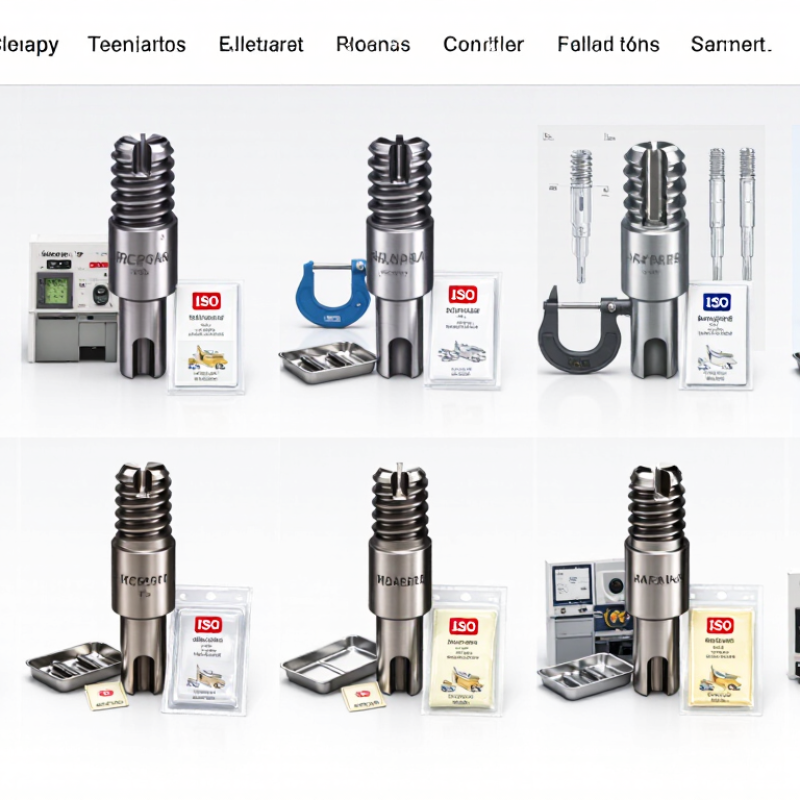
Herbert screws are specialized orthopedic implants designed to compress bone fragments without leaving a prominent screw head. Their threads usually have different pitches at each end. This design gradually pulls the fragments together during insertion. The screw can sit beneath the bone surface. That matters in joints and areas with little soft-tissue coverage. The term is not perfectly uniform across every catalog, so buyers should check the technical definition carefully.
Surgeons commonly use Herbert screws for small-bone fractures, especially in the wrist, hand, foot, and ankle. They may also support selected osteochondral fragments or other compact bone repairs. Use depends on fracture pattern, bone quality, imaging results, and surgical technique. Small details matter. Diameter, thread length, cannulation, and insertion instruments must match the procedure. Incorrect sizing can reduce compression or damage nearby structures. A catalog description alone is not enough.
For global buyers, reliable documentation is essential. Suppliers should provide material specifications, dimensional drawings, sterilization information, and applicable medical-device compliance records. Traceability should cover batch numbers, packaging, and shelf-life data. Buyers also need clear instructions for compatible guidewires and drivers. The best purchasing decision is not always the lowest quoted price. Clinical suitability, manufacturing consistency, and after-sales technical support deserve equal attention. I would also question vague claims about universal use. Herbert screws are useful, but they are not suitable for every fracture or every patient.
“Herbert screw” is not a universally defined ISO or ASME fastener designation. In international purchasing, the term should be confirmed against the supplier’s drawing, dimensional specification, thread form, material grade, head style, and intended application. The profiles below represent supplier categories and commonly available sourcing capabilities without displaying company or brand names.
| No. | Supplier Profile | Typical Supply Region | Common Materials | Typical Size Coverage | Thread Options | Relevant Standards | Typical Uses |
|---|---|---|---|---|---|---|---|
| 1 | Precision Machined Screw Supplier | North America and Europe | Carbon steel, alloy steel, stainless steel | Approximately M2–M12; #2–1/2 in. | Metric coarse/fine and Unified UNC/UNF | ISO metric threads; ASME B1.1; ISO 898-1; ASTM F593 where applicable | Industrial machinery, automation equipment, instrumentation, and general engineering assemblies |
| 2 | Cold-Formed Fastener Supplier | East and Southeast Asia | Low-carbon steel, alloy steel, 300-series stainless steel | Approximately M2–M10; #2–3/8 in. | Metric, UNC, and UNF | ISO 898-1; ISO 3506 for stainless fasteners; DIN or ASME dimensional references | Consumer equipment, electrical enclosures, appliances, and high-volume assembly lines |
| 3 | Stainless Corrosion-Resistant Screw Supplier | Global export markets | A2/304 and A4/316 stainless steel | Approximately M3–M16; #4–5/8 in. | Metric coarse/fine and Unified threads | ISO 3506; ASTM F593; ISO 965 thread tolerances | Food-processing equipment, marine hardware, outdoor structures, chemical equipment, and washdown environments |
| 4 | High-Strength Alloy Screw Supplier | Europe and North America | Heat-treated alloy steel, quenched-and-tempered steel | Approximately M4–M24; 1/4–1 in. | Metric coarse/fine, UNC, and UNF | ISO 898-1 property classes 8.8, 10.9, and 12.9; ASTM A574 for socket screws | Heavy machinery, tooling, robotics, automotive systems, and load-bearing joints |
| 5 | Self-Tapping and Thread-Forming Screw Supplier | Asia, Europe, and contract-manufacturing hubs | Case-hardened carbon steel, stainless steel, hardened alloy steel | Approximately 1.5–8 mm diameter; #2–5/16 in. | Tapping, thread-forming, and thread-cutting profiles | ISO 1478; DIN 7500 references; ISO 2702 for mechanical properties where applicable | Sheet metal, plastics, electronics housings, HVAC components, and thin-wall assemblies |
| 6 | Small-Diameter Micro Screw Supplier | Specialist manufacturing centers in Asia and Europe | Stainless steel, titanium, nickel alloys, hardened steel | Approximately M0.6–M3; #000–#4 | Metric fine and Unified miniature threads | ISO 965; ISO 3506 for stainless grades; customer drawings for miniature parts | Medical devices, optical instruments, watches, sensors, electronics, and precision mechanisms |
| 7 | Coated and Plated Screw Supplier | Global industrial supply chains | Carbon steel, alloy steel, stainless steel | Approximately M3–M20; #4–3/4 in. | Metric, UNC, UNF, and machine-screw threads | ISO 4042 for electroplated coatings; ISO 10683 for zinc-flake coatings; ISO 898-1 | Automotive, construction equipment, electrical cabinets, outdoor machinery, and corrosion-controlled assemblies |
| 8 | Custom-Drawing Screw Supplier | Worldwide OEM and contract-manufacturing markets | Steel, stainless steel, brass, bronze, aluminum, titanium | Drawing-dependent; commonly M2–M30 | Metric, Unified, special pitches, and proprietary thread forms | Customer drawings supported by ISO, ASME, DIN, ASTM, or EN requirements | Special machinery, aerospace support equipment, laboratory systems, energy equipment, and replacement parts |
| 9 | Non-Ferrous and Lightweight Screw Supplier | Europe, North America, and Asia | Aluminum, brass, bronze, copper, titanium | Approximately M2–M16; #2–5/8 in. | Metric and Unified machine threads | ISO 965; ASTM material specifications; customer-defined mechanical requirements | Electrical conductivity, weight-sensitive equipment, marine components, aerospace interiors, and decorative hardware |
| 10 | Low-Volume and Replacement-Part Supplier | Regional distributors and online industrial channels | Carbon steel, stainless steel, brass, alloy steel | Common stock ranges from M2–M20 and #2–3/4 in. | Common metric, UNC, and UNF sizes | DIN, ISO, ASME, ASTM, and manufacturer drawing requirements | Maintenance, repair, overhaul, prototype development, legacy equipment, and small-batch production |
Buyer checklist: Before placing an order, verify the screw’s exact designation, head geometry, drive type, nominal diameter, length, pitch, thread tolerance, material grade, strength class, surface treatment, corrosion requirements, inspection documents, and packaging. “Herbert screw” should be treated as a purchasing term requiring technical confirmation rather than as a single globally standardized screw category.
Herbert screws are orthopedic implants designed to compress bone fragments. Their threaded ends usually have different pitches. This draws fragments together during insertion. The screw can sit beneath the bone surface.
Surgeons commonly use them for small-bone fractures. Typical areas include the wrist, hand, foot, and ankle. They may also support selected osteochondral fragments. Use depends on imaging and fracture stability.
A recessed screw head reduces prominence near joints. This matters where soft-tissue coverage is thin. Less prominence may reduce irritation during movement. It is not automatically suitable for every location.
Buyers should compare diameter, length, thread design, and cannulation. Instrument compatibility also requires careful checking. A small mismatch can reduce compression. It may also affect nearby structures.
Request material specifications and dimensional drawings. Review sterilization information and compliance records. Batch numbers should support traceability. Packaging and shelf-life details also matter.
Yes, samples can reveal practical problems early. Qualified technical personnel should measure threads and test instrument fit. Check the sample against approved drawings. A polished sample proves very little alone.
Ask about inspection equipment, production capacity, and packaging controls. Request dimensional inspection reports and material certificates. Review how specification changes are documented. Evidence matters more than confident sales language.
Not necessarily. A low price may hide tooling fees or inconsistent batches. Delayed replacements can increase the real purchasing cost. I would compare quality, continuity, support, and delivery terms together. The cheapest option can become expensive.
Herbert Screws are specialized orthopedic fixation devices designed to provide stable, compression-based support for small-bone fractures, joint reconstruction, and other precise surgical applications. Their headless design can help reduce tissue irritation while maintaining reliable internal fixation. This article explains their common uses and outlines the key factors global buyers should consider when evaluating suppliers, including material quality, dimensional accuracy, manufacturing consistency, production capacity, quality-control procedures, and compliance with relevant medical-device requirements.
The guide presents a practical comparison of ten leading supplier options without focusing on brand names, examining product quality, pricing, minimum order quantities, lead times, customization capabilities, packaging, and certification availability. It also offers purchasing advice to help buyers match supplier strengths with their clinical, regulatory, and logistical needs. By reviewing technical documentation, requesting samples, confirming traceability, and assessing communication and after-sales support, buyers can select a dependable Herbert Screws supplier and establish a more secure, efficient, and cost-effective procurement process.
