Bonevia
In the evolving landscape of orthopedic surgery, **Headless Cannulated Screws** are gaining prominence. These innovative devices offer distinct advantages in stabilizing fractures and enhancing healing. Surgeons appreciate their design, which allows for an unobtrusive profile and reduced risk of soft tissue irritation.
As we approach 2026, it's essential to reflect on the technological advancements in this area. Many practitioners have noted improvements in surgical outcomes. However, challenges remain. Some cases show complications associated with misalignment or improper placement.
Understanding the evolving applications of **Headless Cannulated Screws** will position healthcare professionals to optimize patient care. This guide examines current trends, best practices, and potential issues faced in the use of these screws. Updated insights from the field can lead to better decision-making in surgical settings.
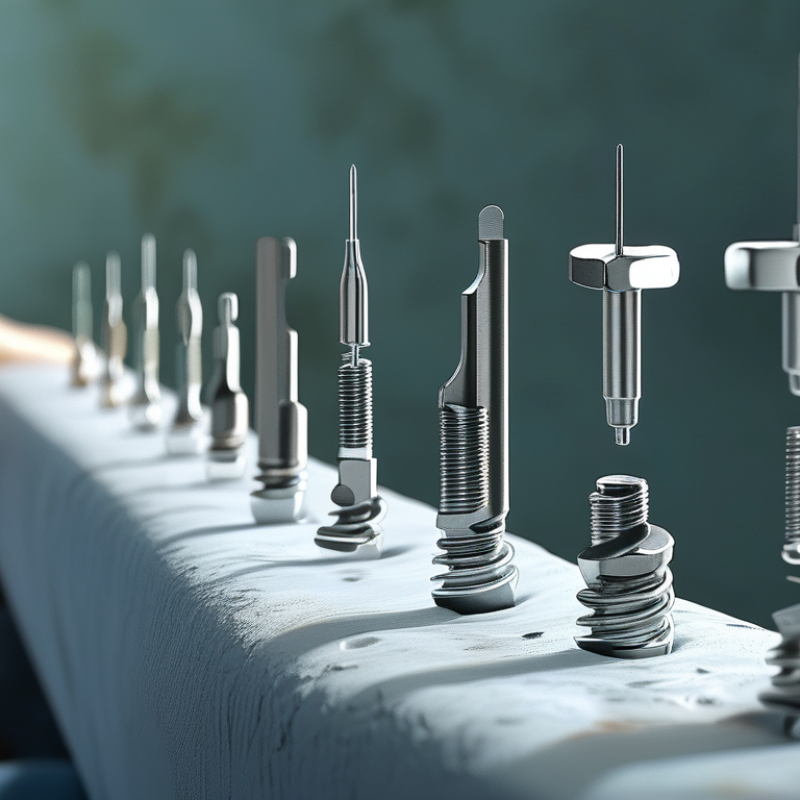
Headless cannulated screws are unique surgical tools designed for precise orthopedic applications. Their design features a hollow shaft, allowing screw placement over guide wires. This can enhance screw placement accuracy. One significant advantage is the reduced prominence of the screw head. This minimizes irritation to surrounding tissues during recovery.
The intricate design of these screws is tailored to support various bone healing requirements. They come in various sizes and lengths. Surgeons choose these based on the specific needs of each patient. The challenge lies in ensuring proper alignment during insertion. Misalignment can impede healing or lead to complications.
Moreover, despite their advantages, understanding the nuances of headless screws can be complex. Many surgeons may not have extensive experience with these tools. Continuous education is needed to optimize their use. Developing expertise in this area may require additional training. This reflection on the learning curve is crucial in enhancing surgical outcomes.
This chart illustrates the projected usage of headless cannulated screws across different medical applications in 2026. The data indicates a diverse range of applications where these screws are increasingly favored due to their design and effectiveness.
Headless cannulated screws are pivotal in orthopedic surgery. These screws allow for secure fixation of bone fragments while minimizing soft tissue disruption. Surgeons often use them for fixation in various procedures, like fracture repairs and osteotomies. Their design provides an advantage; they do not protrude above the bone surface, reducing irritation.
The applications of these screws extend to various orthopedic conditions. In the treatment of proximal humeral fractures, for instance, headless cannulated screws facilitate stable fixation. They also play a significant role in the management of ankle fractures. Here, they help to maintain proper alignment without complicating the soft tissue envelope. The effectiveness of these screws is evident; however, they are not without challenges. For instance, inadequate placement could result in complications or prolonged healing times.
In recent years, the techniques for utilizing headless cannulated screws have evolved. Surgeons continuously refine their skills in this area. Some may still experience difficulties with screw placement. Ensuring optimal positioning requires practice and an understanding of three-dimensional anatomy. It’s important for surgeons to reflect on their experiences to improve technique and patient outcomes.
Headless cannulated screws offer distinct advantages over traditional options in orthopedic surgery. Their design allows for better load distribution and reduced stress on bone structures. This can enhance patient outcomes during recovery. The lack of an external head means these screws can be inserted through smaller incisions, which is a significant benefit for minimally invasive procedures.
Another advantage is the improved alignment these screws provide. Surgeons can place the screw more precisely, reducing the risk of malunion or nonunion. Studies indicate that this precision can lead to faster healing times and lower complication rates. However, there's still room for improvement, as not all surgical teams may be equally trained in this technique.
Despite their benefits, headless cannulated screws come with challenges. The learning curve can be steep for some surgeons. Plus, the cost-effectiveness of these screws in certain healthcare settings should be evaluated. This highlights the need for further research and training to maximize their potential in surgical applications. Overall, headless cannulated screws represent a promising evolution in orthopedic fixation methods.
The future of headless cannulated screw technology is bright, with significant innovations on the horizon. Current trends show a shift towards bioactive materials that promote bone healing. A recent industry report indicates that the global demand for orthopedic fixation devices is expected to grow at a CAGR of 6.2% over the next five years. This increase is driven by an aging population and rising incidence of orthopedic conditions.
New designs incorporating advanced manufacturing techniques, such as 3D printing, are gaining traction. This allows for custom implants tailored to individual patient anatomies. Despite these advancements, challenges remain. The long-term efficacy of new materials is still under scrutiny. Additionally, the integration of digital technologies for improved surgical precision is still developing. As these innovations unfold, continuous evaluation of their clinical outcomes will be essential to ensure patient safety.
Surgeons are increasingly faced with decisions on the best materials and designs available. The diversity in options can lead to confusion and inconsistency in practice. Existing studies suggest a need for comprehensive training programs to equip orthopedic professionals with the latest knowledge and skills. Therefore, while the future presents exciting possibilities, it also demands a critical approach to adoption and implementation.
When considering the surgical implementation of headless cannulated screws, it's crucial to focus on best practices. Proper patient selection is the foundation. Surgeons must evaluate factors such as age, bone quality, and injury type. Customizing the approach enhances the likelihood of successful outcomes. Real-world examples show that these screws work well in various settings, from fractures to osteotomies.
Additionally, surgical technique plays an essential role. Ensuring accurate screw placement requires skill and experience. Utilizing fluoroscopy during the procedure helps improve precision. Properly drilling and tapping the bone before insertion can prevent complications. Surgeons often reflect on their previous cases, understanding that even small errors can lead to significant problems later.
Post-operative care is another area that warrants attention. Patients should be monitored for signs of complications, such as infection or hardware failure. Communication with patients about the recovery process builds trust. Practitioners often share insights from cases that did not go as planned, reiterating the need for constant learning. This ongoing evaluation helps refine surgical methods and enhance patient care.
: They are specialized surgical tools with a hollow shaft designed for orthopedic applications.
The hollow shaft allows for accurate screw placement over guide wires.
It minimizes irritation to surrounding tissues during the recovery process.
They come in different sizes and lengths tailored to individual patient needs.
Ensuring proper alignment during insertion is crucial to avoid complications.
Many surgeons may not have extensive experience, making ongoing training essential.
They offer better load distribution and reduced stress on bone structures.
The learning curve can be steep for some surgeons, requiring additional training.
Improved alignment may lead to faster healing times and lower complication rates.
Their cost-effectiveness in certain healthcare settings needs further evaluation and research.
Headless Cannulated Screws are innovative implants designed to improve orthopedic surgical outcomes. Their unique design allows for compression at the fracture site without the need for prominent hardware, reducing soft tissue irritation. Commonly used in the fixation of bone fragments, these screws offer advantages over traditional options, such as enhanced stability and minimized postoperative complications.
As we look towards the future, advancements in Headless Cannulated Screw technology are anticipated, including improved materials and smart features that track healing. Best practices in surgical implementation, focusing on technique and patient selection, can further enhance outcomes and streamline recovery processes. By understanding these aspects, surgeons can effectively leverage Headless Cannulated Screws in their practice for better patient care.
