Bonevia Bonevia

Why Choose Spinal Internal Fixation Systems?

Time:2026-11-14 Author:Sophia
0%

Spinal Internal Fixation Systems use implants such as screws, rods, plates, or cages to help stabilize selected areas of the spine. Surgeons may consider them when instability, deformity, injury, or certain spinal conditions require support during healing. The specific design depends on the anatomy, the planned procedure, and the patient’s health. A rod and screw construct, for example, must fit the surgical plan and the spine’s individual shape. Details matter.

These systems can help maintain alignment and limit unwanted movement, but they do not repair every underlying problem on their own. Their benefits and risks vary with the diagnosis, surgical technique, bone quality, and recovery. Implant materials and imaging compatibility also deserve careful review with the treating team. That distinction is easy to overlook. Choosing hardware is not simply a matter of selecting the newest device; evidence, surgeon experience, and patient-specific needs all count. A thoughtful discussion should cover expected outcomes, possible complications, alternatives, and follow-up care. Even a well-designed implant cannot guarantee a particular result. Understanding how Spinal Internal Fixation Systems work—and where their limits remain—can help patients ask clearer questions and make informed decisions alongside qualified clinicians.
Why Choose Spinal Internal Fixation Systems?

What Spinal Internal Fixation Systems Are

Spinal internal fixation systems are implanted devices used to support and stabilize parts of the spine. They may include screws, rods, plates, or interbody devices, depending on the procedure. Screws anchor into selected vertebrae, while rods can connect them and help maintain alignment. The hardware is chosen to fit a person’s anatomy and the surgeon’s treatment plan.

These systems may be considered when spinal instability, a fracture, deformity, or certain degenerative conditions need surgical treatment. They do not heal bone by themselves. In some operations, they hold vertebrae steady while bone fusion develops over time. That is the idea.

The exact components and placement vary; not every patient needs the same arrangement. A surgeon reviews imaging, symptoms, bone quality, and overall health before recommending an approach.

Recovery also differs, and the presence of hardware does not guarantee pain relief. It is a useful support, not a perfect fix. Even a well-planned system can require follow-up imaging and careful recovery guidance.

Key Components of Spinal Fixation Systems

Key Components of Spinal Fixation Systems

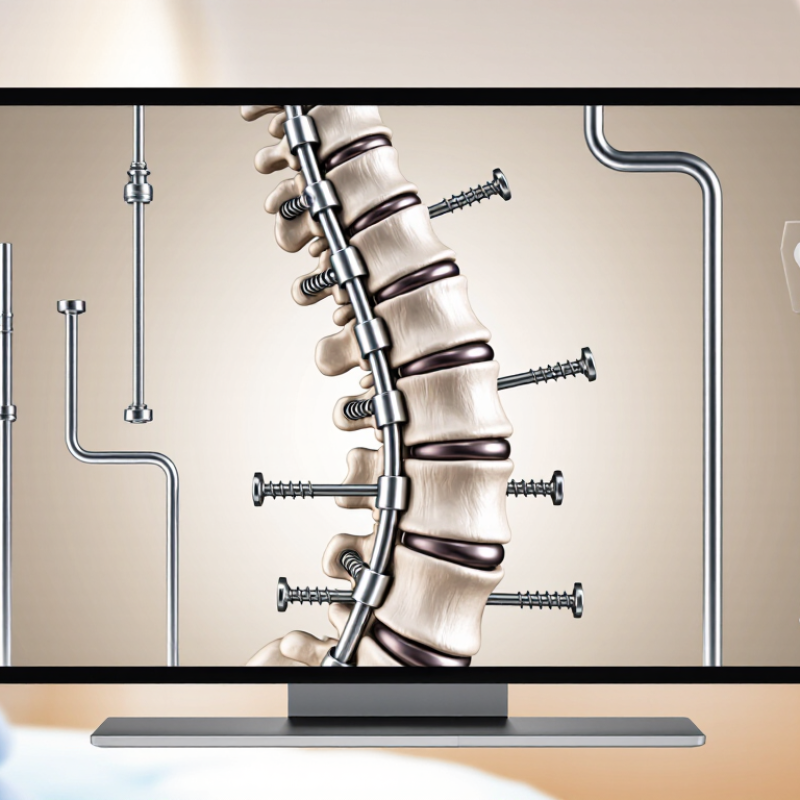
A spinal fixation system is a set of parts designed to stabilize selected vertebrae. Pedicle screws anchor into bone, while rods connect the screws and help maintain alignment. Locking caps secure each screw to its rod. Hooks or connectors may be added when anatomy or the surgical plan calls for them. Small parts matter. A cap that is not fully seated can affect the construct, so placement and tightening require careful technique.

Material and design choices also matter. Titanium alloys are commonly used for screws and rods; their strength and imaging characteristics should be considered alongside the patient’s needs. Systems are not interchangeable by default. Screw diameter, rod shape, and connection type must match the intended construct. AHRQ’s HCUP Statistical Brief #170 reported about 465,000 inpatient spinal fusion procedures in the United States in 2011, nearly twice the 2001 count. That figure describes procedure volume, not which components work best. It does, however, underline why clear component selection and reliable handling matter. The inventory can look straightforward. It is not always. A fixation system supports stabilization; it does not by itself guarantee fusion or a good clinical outcome.

Why Choose Spinal Internal Fixation Systems? — Key Components

The stiffness of materials used in spinal implants can influence construct mechanics. This chart compares representative Young’s modulus values for cortical bone and materials commonly used in spinal implant components.

Values are representative engineering estimates in gigapascals (GPa), not clinical outcome data. Actual properties vary by material grade, manufacturing process, and— for bone—direction and individual. Material stiffness is only one consideration when selecting a fixation system.

How Internal Fixation Supports Spinal Stability

Why Choose Spinal Internal Fixation Systems?

How Internal Fixation Supports Spinal Stability

Spinal internal fixation systems use components such as screws and rods to help stabilize selected areas of the spine. Surgeons may recommend them when movement between vertebrae needs support, often after a fusion procedure. The hardware helps hold bones in position while healing progresses. It does not replace the body’s healing process.

Stability can reduce unwanted movement at the treated level and help maintain alignment. This may support recovery, but results depend on the diagnosis, surgical plan, and individual health. Hardware is not a shortcut. Healing takes time, and discomfort or activity limits may continue during recovery. A useful detail: the size and placement of each component are planned around a person’s anatomy. Still, no system guarantees a specific outcome.

Tips: Ask your care team what the fixation is intended to do in your case. Clarify activity limits, follow-up imaging, and which symptoms need prompt attention. Keep questions written down; recovery can make small details easy to forget.

Conditions That May Require Spinal Fixation

Spinal fixation may be considered when the spine cannot remain stable during normal movement. An unstable fracture after a fall or collision is one example. A surgeon may also discuss fixation when vertebrae slip out of alignment, as in some cases of spondylolisthesis. The amount of slippage, pain, nerve symptoms, and imaging findings all matter. One scan rarely tells the whole story.

Scoliosis or another spinal deformity may need fixation when the curve is progressing, affects balance, or causes significant symptoms. Severe disc wear can also contribute to instability, but age-related changes alone do not mean surgery is needed. Sometimes fixation is considered after a procedure that removes bone or tissue pressing on nerves, if that procedure could leave the spine less stable. The details vary.

Tumors, infection, or a fracture that fails to heal can weaken spinal structures. In these situations, fixation may help support the spine while other treatment addresses the underlying problem. It is not a simple decision. A careful assessment may include physical examination, medical history, and imaging such as X-rays, CT, or MRI. Patients should ask what instability is present, what alternatives exist, and what recovery may involve. The answer can be less clear than a scan suggests.

Why Choose Spinal Internal Fixation Systems? - Conditions That May Require Spinal Fixation
Condition or Situation How Spinal Stability May Be Affected When Fixation May Be Considered Important Considerations
Unstable spinal fracture A fracture may disrupt vertebral alignment or supporting structures, potentially placing the spinal cord or nerve roots at risk. Fixation may be used when a fracture is unstable, significantly displaced, or cannot be adequately supported with non-surgical treatment. Treatment depends on fracture pattern, neurological findings, bone quality, and overall health. Many stable fractures do not require surgery.
Degenerative spondylolisthesis or spinal instability Wear-related changes can allow one vertebra to move relative to another and may contribute to nerve compression or mechanical pain. Fusion with fixation may be considered in selected patients when instability is present and symptoms persist despite appropriate non-surgical care, or when decompression could worsen instability. Imaging findings alone do not determine the need for surgery; symptoms, examination, and response to treatment matter.
Spinal deformity
Examples include scoliosis or kyphosis
A substantial or progressive curve can affect balance, alignment, comfort, or, in some cases, breathing and neurological function. Fixation may help correct and maintain alignment during fusion when surgery is recommended for a severe, progressive, or symptomatic deformity. The decision takes account of curve severity, progression, symptoms, age, skeletal maturity, and surgical risks.
Spinal tumor or destructive lesion A lesion can weaken vertebral bone or require removal of structures that contribute to spinal support. Fixation may be considered if the spine is unstable, a vertebra is at risk of collapse, or surgery to remove a lesion compromises stability. Care is individualized and may involve oncology, radiation therapy, or other treatments. Fixation does not treat the underlying tumor itself.
Spinal infection with structural damage Infection involving a vertebra or disc may damage bone and, in some cases, lead to spinal instability or deformity. Stabilization may be considered when instability or deformity is present, or when surgery to remove infected tissue affects structural support. Antimicrobial treatment is central to managing infection; the need and timing of surgery depend on the individual clinical situation.
Revision surgery or failed fusion A prior fusion may not unite (nonunion), or hardware failure or recurrent instability may affect spinal support. Revision fixation may be considered when symptoms and evaluation indicate a correctable problem that requires renewed stabilization. Assessment may include imaging and evaluation of factors that affect bone healing, such as smoking, bone health, and medical conditions.
Spinal fixation is not needed for every spinal condition. The decision is made by a qualified clinician after reviewing symptoms, examination findings, imaging, treatment options, and individual risks.

Factors That Guide Implant and Treatment Choices

Why Choose Spinal Internal Fixation Systems?
Factors That Guide Implant and Treatment Choices

Choosing a spinal internal fixation system depends on the person, the spinal condition, and the goals of treatment. A surgeon may consider the affected spinal level, bone quality, anatomy, and whether the spine needs added stability. Imaging and medical history help shape the plan. So does the person’s daily routine, including work and movement needs. Small details matter.

Implant design is only one part of the decision. The surgical approach, possible risks, recovery expectations, and follow-up care also deserve discussion. A suitable option for one patient may not suit another. Patients can ask how the proposed system supports the treatment plan, what alternatives exist, and which signs need prompt medical attention. Still, no plan removes every uncertainty; that is worth discussing openly with the care team.

Tips: Bring a medication list and questions to the appointment. Ask what recovery may look like at home, and clarify activity limits before leaving. If an answer feels unclear, ask again. Decisions should be made with a qualified spine specialist, using individual clinical findings rather than a device’s features alone.

FAQS

What are spinal internal fixation systems?

They are implanted devices that support and stabilize selected parts of the spine. Components may include screws, rods, plates, or interbody devices.

How do screws and rods help stabilize the spine?

Screws anchor into selected vertebrae, and rods can connect them. Together, they help hold bones in position and maintain alignment. They do not heal bone by themselves.

When might a surgeon consider spinal fixation?

It may be considered for instability, certain fractures, spinal deformity, or some degenerative conditions. The specific findings matter.

Does spinal fixation always involve bone fusion?

No. Some procedures use hardware to hold vertebrae steady while bone fusion develops. The treatment plan varies.

How is the hardware arrangement chosen?

A surgeon considers anatomy, imaging, symptoms, bone quality, and overall health. The components and their placement differ between patients.

Does implanted hardware guarantee pain relief?

No. It can support stability, but it cannot promise a specific result. Pain may continue during recovery.

What conditions may weaken or destabilize the spine?

Examples include an unstable fracture, some cases of vertebral slippage, progressing scoliosis, and certain tumors or infections. Age-related disc changes alone do not mean surgery is needed.

What should patients ask their care team?

Ask what the fixation is meant to do, what alternatives exist, and which activities may be limited. Also clarify follow-up imaging and symptoms needing prompt attention. Write questions down. Small details are easy to forget.

Conclusion

Spinal Internal Fixation Systems are medical devices used to help stabilize the spine when its structure needs support. This overview explains what these systems are and introduces common components, such as screws, rods, plates, and connectors, which may be selected and assembled according to a patient’s anatomy and treatment plan. By holding vertebrae in a more stable position, fixation can support alignment and provide conditions for healing, while the specific approach depends on clinical assessment.

The article also describes conditions that may lead a care team to consider spinal fixation, including fractures, deformity, instability, or certain degenerative problems. Implant and treatment choices can be guided by the affected spinal region, the nature of the condition, bone quality, overall health, and the goals of care. Understanding these factors helps readers see why spinal fixation is not a one-size-fits-all solution and why decisions should be made with qualified healthcare professionals.

Sophia

Sophia

Sophia is a dedicated marketing professional with an exceptional depth of knowledge about her company's products and services. With a keen understanding of market trends and customer needs, she crafts insightful blog posts that not only inform but also engage readers, enriching the company’s online......